History of Aranjuez and the Mutiny of 1808
Aranjuez cannot be understood without its history. For centuries it served as the spring residence of the kings of Spain — a place of pleasure and power on the banks of the Tagus that came to decide the fate of the country in a single night: the night of the Mutiny of 1808. Here is its full story, from its origins to the present day.
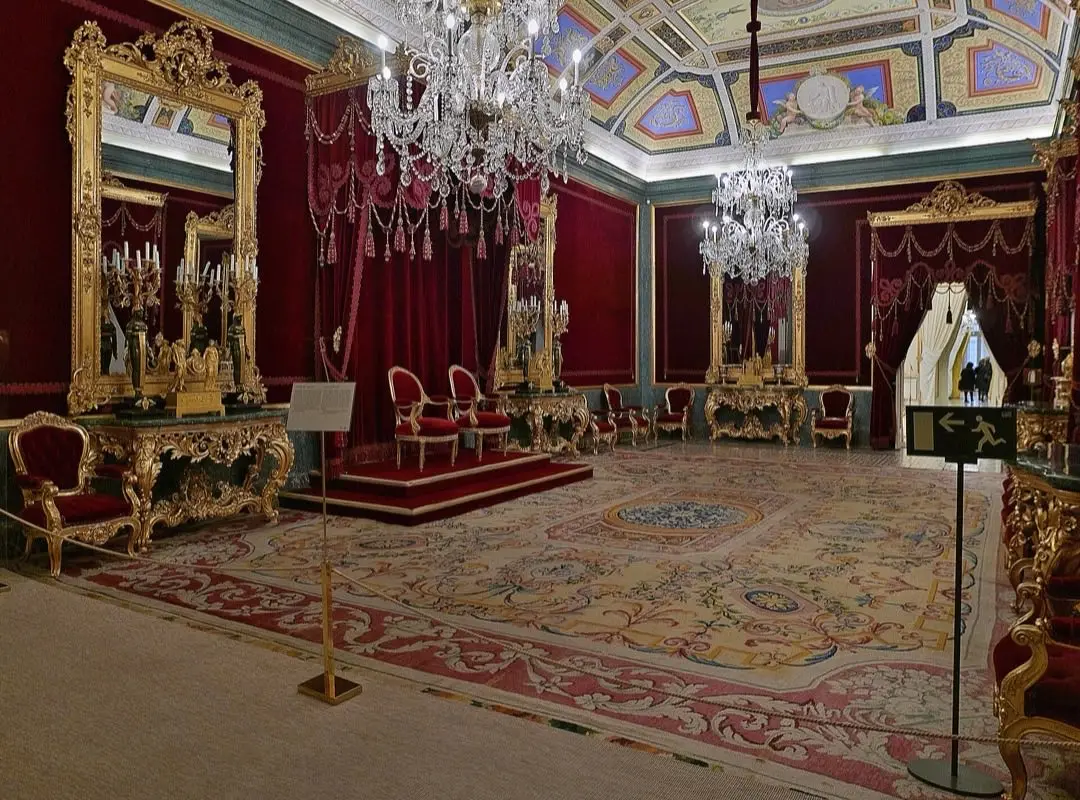
Origins: from the Masters of Santiago to Philip II
The territory of Aranjuez belonged in the Middle Ages to the Order of Santiago, whose grand masters already prized these fertile lands between the Tagus and the Jarama. When the crown absorbed the masterships, Aranjuez passed into royal hands. It was Philip II who, in the sixteenth century, decided to turn it into a Royal Site and commissioned the first plans for the palace and gardens from his leading architects, Juan Bautista de Toledo and Juan de Herrera — the same pair who designed the Monastery of El Escorial.
From the outset, Aranjuez was conceived as a place where nature, water and architecture would work together: orchards, tree-lined avenues and gardens laid out with great precision along the river.
Bourbon splendour (18th century)
The Aranjuez we see today is, above all, the work of the Bourbons. After a fire that damaged the complex, Ferdinand VI and especially Charles III extended the palace with its two wings, planned the town's urban grid — with its wide streets and squares — and enriched the gardens. Charles IV later added the jewel of the Prince's Garden and the Labourer's House.
During this period Aranjuez became one of the four annual "journeys" of the court: the monarchs moved here every spring with their entire retinue, filling the town with life, festivities and pleasure boating on the Tagus (hence the Royal Barges Museum).
The Mutiny of Aranjuez (17–19 March 1808)
The most celebrated episode in Aranjuez's history is also one of the most decisive in the history of Spain. By early 1808 the situation was critical:
- After the disaster of Trafalgar (1805), Spain was suffering a severe economic crisis.
- The Treaty of Fontainebleau (1807) had allowed French troops into the peninsula on their way to Portugal — troops that showed no sign of leaving.
- The people blamed everything on Manuel Godoy, the all-powerful chief minister of Charles IV.
Fearing the worst, the royal family took refuge in Aranjuez, from where it was easy to flee towards Andalusia and even sail to the Americas. The rumour of that possible flight was the spark that set everything off.
The three days that changed Spain
- Night of 17 MarchA group of supporters of Prince Ferdinand, soldiers and townspeople storm Godoy's palace. The minister goes into hiding.
- 18 MarchGodoy is discovered and seized by the crowd. Pressure on the king becomes overwhelming.
- 19 MarchCharles IV abdicates the Crown in favour of his son, who will reign as Ferdinand VII.
The consequences were enormous: the rivalry between Charles IV and Ferdinand VII opened the door for Napoleon to intervene (the Abdications of Bayonne) and place his brother Joseph I on the throne. Barely six weeks later the Uprising of 2 May broke out in Madrid and the Peninsular War began. That mutiny in Aranjuez was, in large measure, the very first link in the chain.
Aranjuez, a UNESCO World Heritage Site
In 2001 UNESCO inscribed the Cultural Landscape of Aranjuez on the World Heritage List. The recognition was not for the palace alone, but for the whole ensemble: the unique relationship between the waters of the Tagus, the designed gardens, the orchards and centuries of human endeavour. It stands as one of the great examples of a cultural landscape in Europe.
The reenactment of the Mutiny today
Every year, in early September, Aranjuez relives its great historical moment with the reenactment of the Mutiny, declared a Festival of National Tourist Interest. Hundreds of residents dress in period costume and recreate in the streets and around the palace the assault, the fall of Godoy and the abdication. It is one of the best times of the year to visit the town.
Experience this history in the palace
A guided tour takes you through the very rooms where it all happened and brings the story to life on the spot.
See guided tour →⏳ Time-slot places are limited. Lock in your time · cancellation terms on the product page.
Frequently asked questions
What was the Mutiny of Aranjuez?
A popular revolt from 17 to 19 March 1808 against Godoy that ended with his fall and the abdication of Charles IV in favour of Ferdinand VII.
Why was the court in Aranjuez?
It took refuge there in the face of the entry of French troops; from Aranjuez it was easy to depart towards Andalusia or the Americas.
When is the reenactment of the Mutiny held?
In early September, a Festival of National Tourist Interest, with street reenactments throughout the town.